NaNots · A new class of medicine

The power
of Subtraction

Tumors secrete soluble proteins that block immune attack. Conventional drugs can't address this.

NaNotics is developing the first injectable medicine that removes
these inhibitors — enabling a therapeutic response that
no drug has achieved before.

Scroll in Portrait mode for a simplified website. For a richer visual experience, including interactive animations,
rotate your phone to Landscape.

Scroll
Problem

Many diseases are driven by soluble proteins

These proteins circulate in blood or tissue fluid at elevated levels. In cancer, tumors of all types surround themselves with immune inhibitors, the most powerful of which are undruggable. Depletion of these inhibitors results in profound tumor regression in both animals and humans.

Inflammatory diseases in contrast are often driven by excess soluble inflammatory proteins (cytokines). Drugs against these targets do exist but suffer a range of drawbacks that limit their use and efficacy (see Science).

NaNots are the first therapeutic designed specifically to deplete soluble targets, with:

  • deep & rapid effect
  • transformative therapeutic potential
  • low expected toxicity
  • no effect on membrane proteins (see “MESH”)

We are focused first on cancer, using NaNots against sTNF‑Rs, the soluble inhibitor of TNF, the master immune activator.

First Targets

sTNF‑Rs: A Revolutionary Target in Cancer

Tumors of all types deploy sTNF‑Rs – the natural inhibitor of TNF – to suppress immune attack. This video explains how.Here's the pathogenic sequence:

1
2
3
4

1

Cell NavigationImmune cells navigate through circulation & tissue to the tumor site, guided by attractant molecules – chemokines – secreted by the tumor.

2

TNF ReleaseImmune cells release TNF in the tumor microenvironment. In cancer, TNF binding TNF receptors induces a broad anti-tumor immune attack.

3

sTNF‑R SecretionCells in the tumor secrete soluble forms of TNF receptors – sTNF‑Rs – that bind TNF, blocking its function and preventing effective anti-tumor action.

4

Tumor GrowthThe tumor continues to grow beneath a protective shield of sTNF‑Rs, and generates more sTNF‑Rs as it does.

A fully validated human target

Depletion of sTNF‑Rs from plasma by apheresis was used clinically in the 2000s by Dr. M. Rigdon Lentz (Germany) to treat late stage solid tumor cancer (see Validation). "Immune Pheresis" showed exceptional response and safety against a broad range of metastatic cancer types – outperforming present day checkpoint inhibitors. However, Immune Pheresis treatments were lengthy, invasive and expensive. NaNots deplete the same targets with an injectable therapeutic, in a safe and scalable way.

sTNF‑Rs are a special type
of undruggable
target that
we call “MESH

The NaNot Platform – Structure

The NaNot Platform

NaNots are injectable nanoparticles that circulate in the bloodstream, selectively adsorbing elevated pathogenic targets, clearing them from circulation to resolve disease.

NaNots are:

120 nanometers in diameter
chemically synthesized from known materials
biocompatible, cleared safely by the liver
made by a robust, highly controllable process
120 nm
diameter — roughly
the size of a virus
>95%
target depletion in
under 5 minutes
30+
granted patents in US & key foreign regionspatents in US & key foreign regionspatents in US & key
foreign regions

NaNots turn the field of nanomedicine upside down. Prior nanomedicinesnanomedicines failed due to:

exposed targeting ligands which promote overly rapid clearancelarge size, preventing efficient tissue entryinsufficient delivery capacity for therapeutic drug load

exposed targeting ligands which promote overly rapid clearance
large size, preventing efficient tissue entry
insufficient delivery capacity for therapeutic drug load

exposed targeting ligands which promote overly rapid clearancelarge size, preventing efficient tissue entryinsufficient delivery capacity for therapeutic drug load

In contrast, NaNots are subtractive – they aren't targeted to tissue and don't deliver anything – they succeed by depleting key pathogenic soluble proteins from blood, avoiding the failure modes of prior nanomedicines.

One platform, many targets

NaNots are made using Click chemistry; only the capture agent changes when switching targets or diseases. This modularity dramatically reduces development time and cost for new indications – leveraging the same materials, manufacturing process, platform safety, and performance parameters across an entire pipeline.

We've prototyped NaNots against other soluble drivers of major diseases – including the soluble form of the cancer checkpoint PD-L1, in collaboration with Mayo Clinic (see Validation). Beyond cancer, multiple sclerosis, various autoimmune diseases – even sepsis – all involve such targets.

The NaNot Platform — Mechanism

NaNots Clear
sTNF‑Rs & Promote
Immune Attack

Following injection, NaNots mix rapidly in circulation. This video illustrates what happens next in cancer:After injection, NaNots mix rapidly in circulation, following this sequence:

1
2
3

1

Systemic depletion & local effectFollowing injection, NaNots circulate, depleting sTNF‑Rs to reduce binding & inhibition of TNF – especially in the tumor vasculature where sTNF‑R concentration is highest.

2

Diffusion sinkNaNots create a diffusion sink in the circulation – inducing migration of sTNF‑Rs out from the tumor microenvironment.

3

Immune activationOnce sTNF‑Rs have been depleted, TNF expressed by immune cells induces a broad anti-tumor attack, leading to tumor regression.

Why not just drug sTNF‑Rs?

sTNF‑Rs are an instance of an undruggable target class we call “MESH” (see Science). A drug binding sTNF‑Rs would also block membrane TNF receptors, which are essential for responding to cancer as well as infection. NaNots are designed to capture and deplete soluble target forms without binding membrane forms.sTNF‑Rs are an instance of an undruggable target class we call “MESH” (see Science), which stands for “Membrane Essential, Soluble Harmful”. A drug binding sTNF‑Rs would also block membrane TNF receptors – essential for responding to cancer as well as infection. NaNots are designed to capture and deplete soluble targets without binding membrane forms.

What happens to
the NaNots?

NaNots circulate for several days capturing their targets, then themselves are captured and safely broken down – along with their targets – by liver-resident Kupffer macrophages.

Deep Dives

Click the “hamburger” menu in the upper right for Deep Dives on Science, Validation and More.

Team

Core Management
Lou Hawthorne

Lou Hawthorne

Founder & CEO

NaNot inventor & company founder. Led commercialization of cloning starting 1998. Co-founded Viagen, now world’s largest cloning company. Led early generative A.I. development projectdevelopment program. Cancer research since 2008, including 4 years of study w/ Immune Pheresis inventor. 30+patents. Princeton, BA 1983.

Curtis Ruegg

Curtis Ruegg, Ph.D.

CDO / COO

33+ years as a biopharma leader. Inventor/developer of PROVENGE® and DAXXIFY®. Former CEO of Amphivena & Parvus Therapeutics. Ph.D. from Johns Hopkins. Cancer Research Institute Fellow at Stanford. 50+ patents. Active member of AACR, SITC and AAI.

John Dodgson

John Dodgson, Ph.D.

CTO

NaNotics co-founder. Expert in micro/nano bioengineering; also expert in IP development with 40+ patents. Pioneer in microfluidics & chemical sensors. Multidisciplinary expertise across physical chemistry and nanomedicine. Ph.D. Newcastle; BA Cambridge Physics.

Key Advisors
Keith Block

Keith Block, M.D.

Advisor

Medical Director: Block Center for Integrative Cancer Treatment; Editor-in-Chief – Integrative Cancer Therapies, a peer-reviewed journal published by Sage Science Press; available in Medline since 2003.

Keith Flaherty

Keith Flaherty, M.D.

Advisor

Director: Developmental Therapeutics – Massachusetts General Hospital; Professor: Harvard Medical School; Cofounder: Loxo Oncology; President: American Association for Cancer Research.

Brian Kennedy

Brian Kennedy, Ph.D.

Advisor

Distinguished Professor: Biochemistry & Physiology; Director: Centre For Healthy Longevity – NUHS; Co-Editor-In-Chief at Ageing Cell; Former CEO: Buck Institute for Research on Aging.

Shazib Pervaiz

Shazib Pervaiz, MBBS, Ph.D.

Advisor

Professor: Department of Physiology, Yong Loo Lin School of Medicine – National University of Singapore; Expert: Cancer Cell Signals; Fellowships: Harvard Medical, Massachusetts General Hospital.
Get in Touch

Get in Touch

We are keen to discuss our work with researchers, prospective clinical partners, patient advocacy groups, and of course, investors. Please tell us about yourself:

* Required

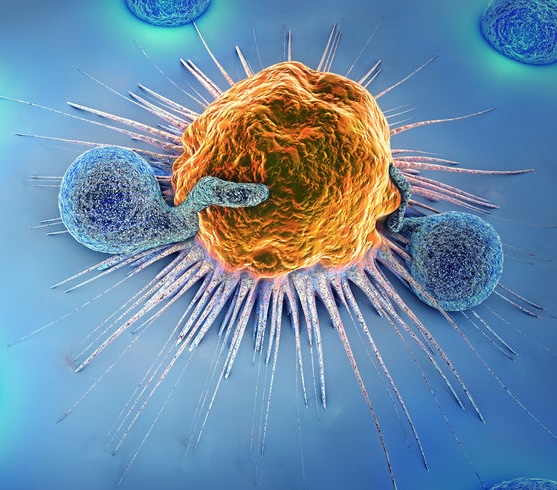
Immune cells attacking a cancer cell